Haus E-commerce
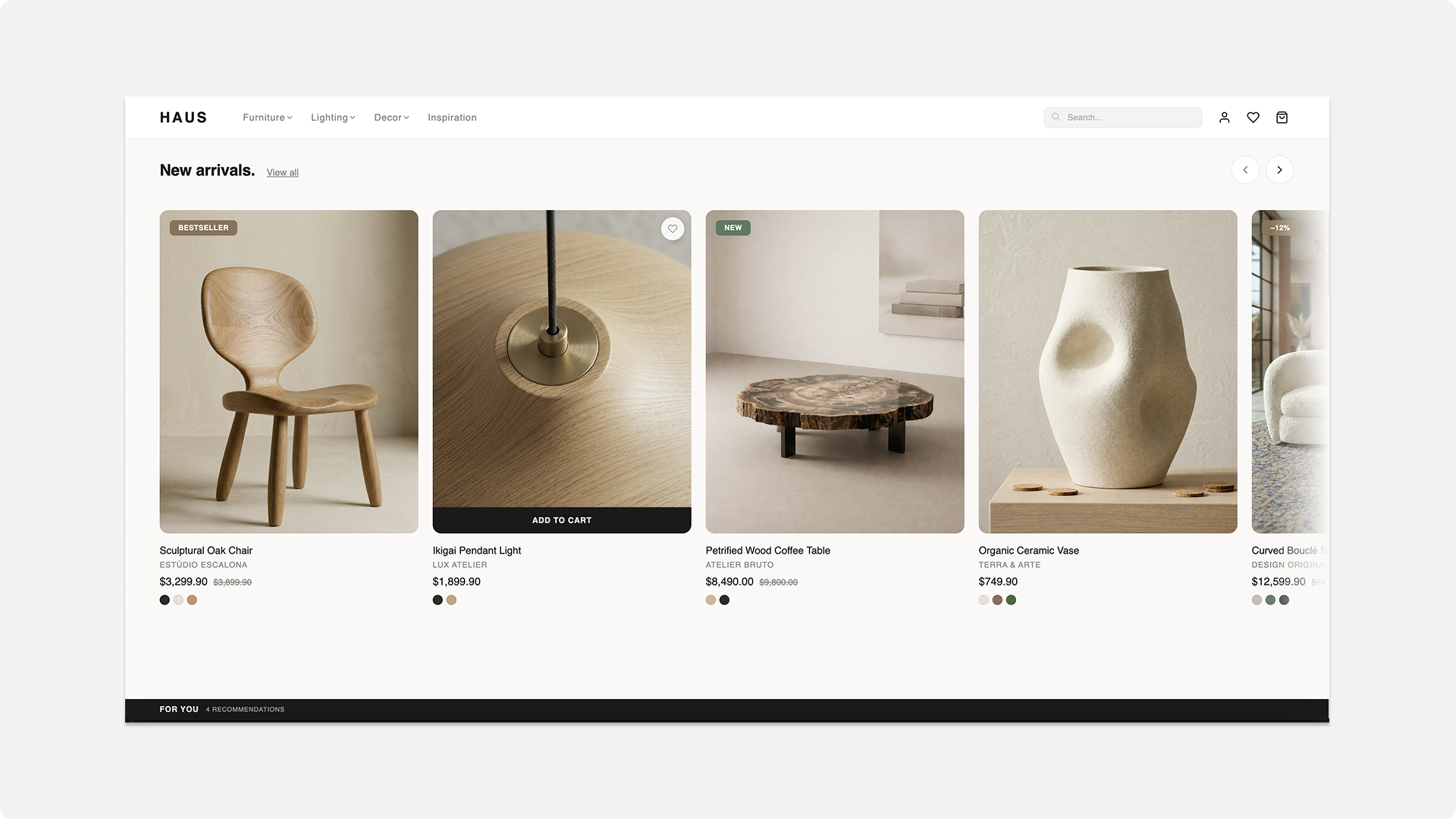
Haus is a luxury furniture and decor platform designed to combine immersive editorial browsing with a scalable e-commerce experience. The product explores how premium visual storytelling can coexist with usability, responsiveness and conversion across high-consideration purchasing journeys.
Luxury commerce platforms often rely heavily on immersive visuals, large media assets and editorial layouts to reinforce brand perception and product value. However, these experiences can quickly introduce performance issues, slower navigation and friction across browsing and checkout flows — especially on mobile devices.
One of the main challenges behind Haus was balancing the visual richness expected from the luxury market with the level of speed, clarity and responsiveness required for a scalable e-commerce experience. From a product perspective, the experience needed to support discovery and aspiration without compromising usability, conversion or technical performance.
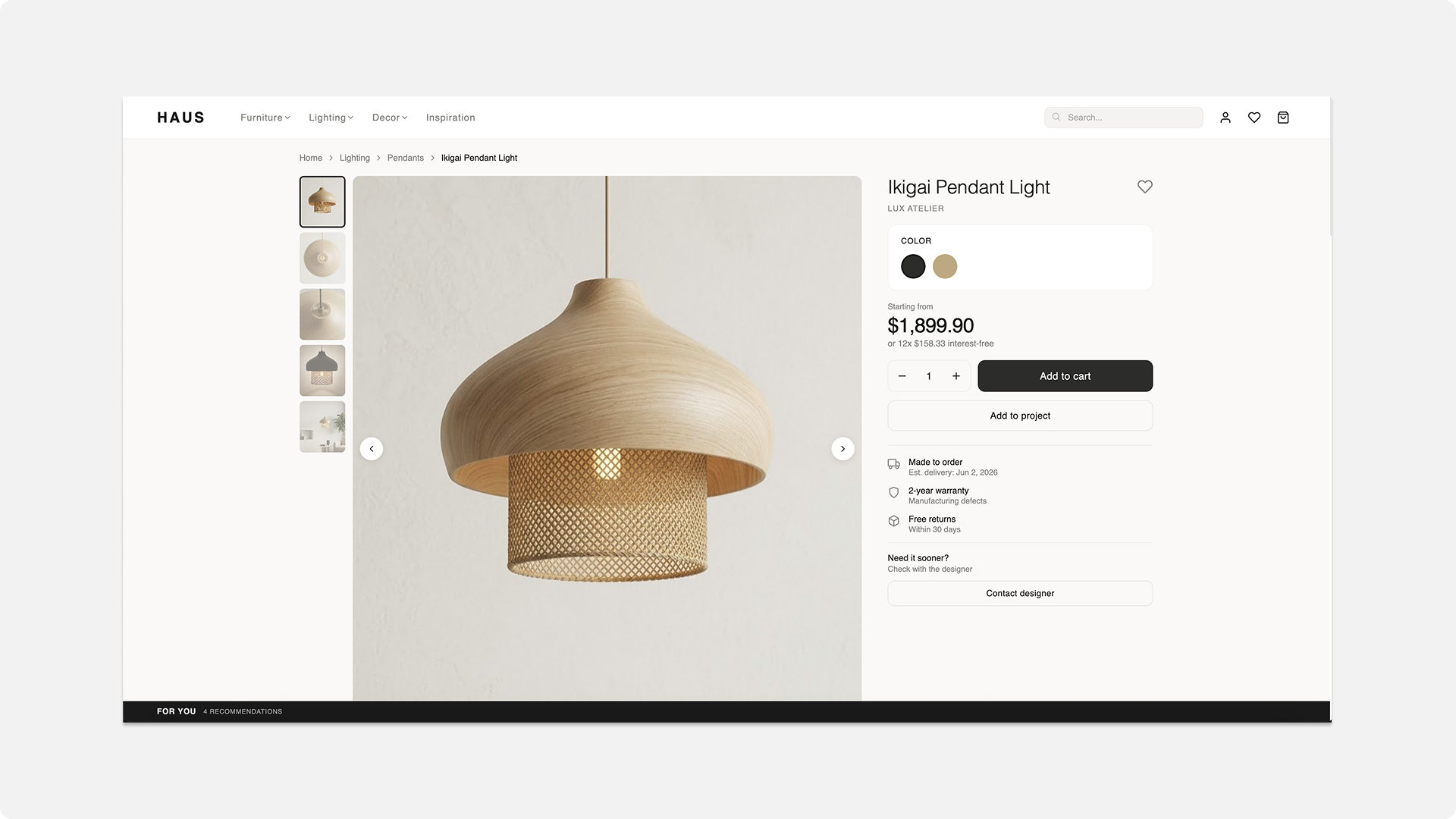
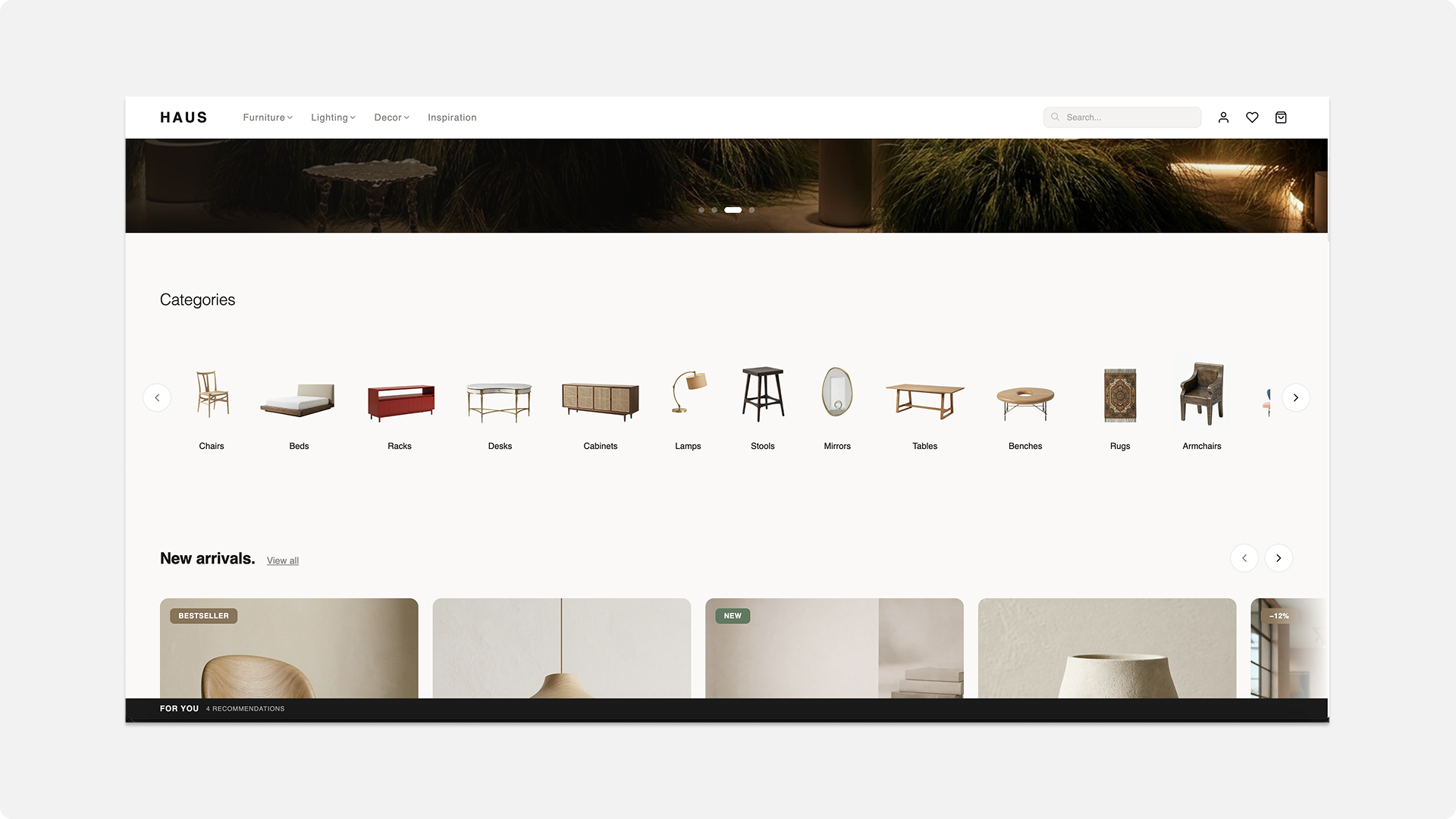
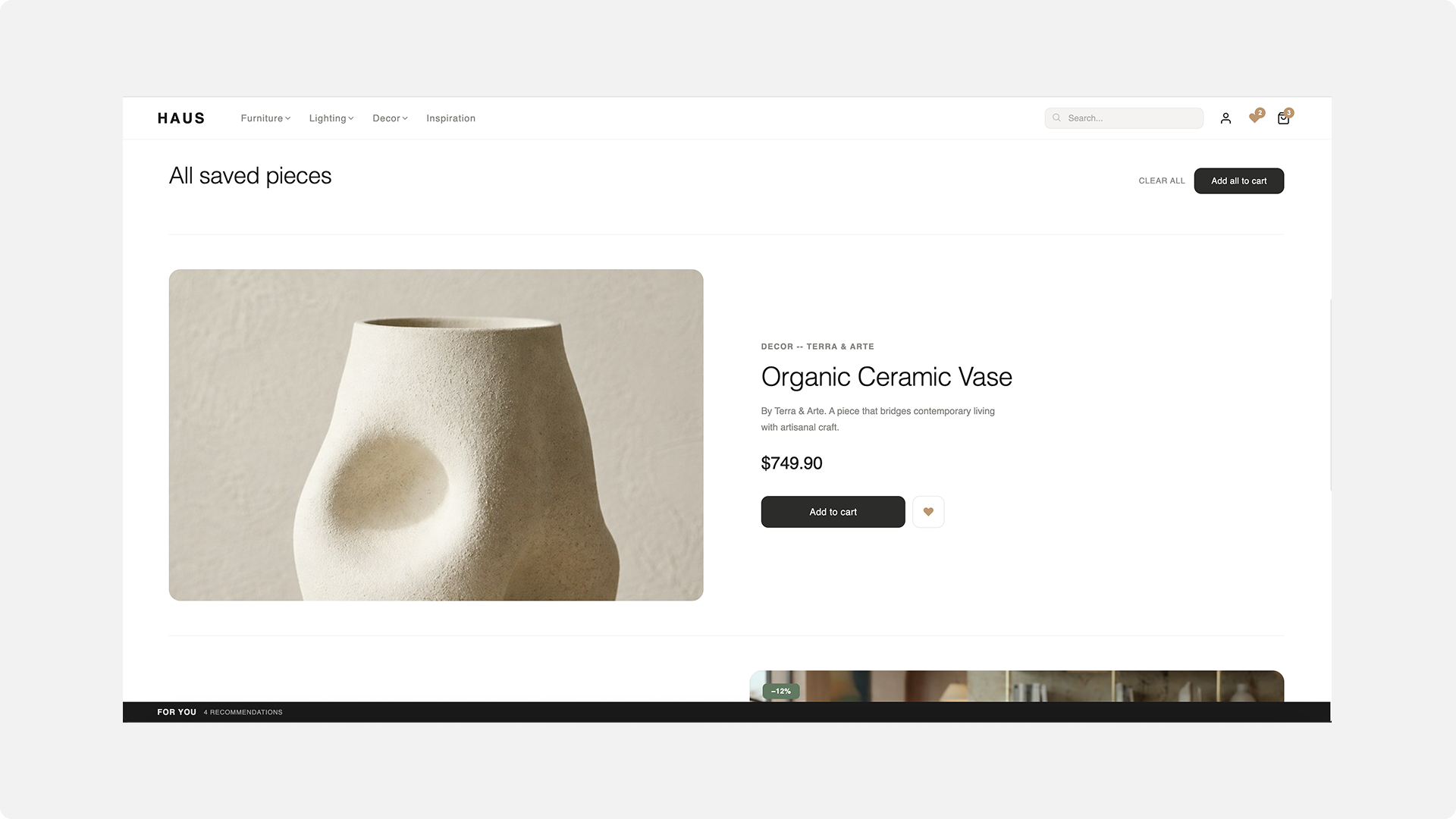
Haus was designed around a modular browsing system that preserves a highly visual and editorial experience while reducing unnecessary friction across navigation and purchasing flows.
The interface prioritizes progressive content hierarchy, simplified product interactions and responsive layouts capable of supporting large visual assets without overwhelming the experience. Many design decisions were shaped around balancing brand storytelling, engineering limitations and conversion goals — ensuring the platform could feel premium while remaining operationally efficient across different devices and user behaviors.
The redesign focused on creating a cleaner, faster and more cohesive commerce experience aligned with the expectations of the luxury market. Performance, responsiveness and visual consistency became central product goals, helping the platform maintain a premium feel without relying on excessive transitions, heavy loading states or unnecessarily complex interactions.
From a systems perspective, the experience was structured through a lightweight and modular design approach capable of supporting scalability while preserving brand consistency across the platform. Simplified design patterns and reusable components helped balance visual sophistication with usability, technical performance and long-term maintainability.